
If you’re an expectant or a new mother, then these 7 gentle tips for new mothers who feel overwhelmed, is the perfect read for you. Motherhood is a beautiful thing. It’s fulfilling but it can sometimes feel overwhelming and challenging.
It’s absolutely normal to feel conflicting emotions such as love, exhaustion, overwhelm, joy and uncertainity. Feeling overwhelmed or stressed out doesn’t mean that you are failing or ungrateful. It quite simply means, you’re human.
This blog post is all about 7 gentle tips for new mothers who feel overwhelmed.
This blog post, offers a gentle realistic support, not another demanding routine. It’s important to know that every baby, mother and routine is unique.
Why does new motherhood feel so overwhelming?
- The physical recovery after birth itself is a huge deal: Your body has grown another human, nourished and cared for it for 9 months. This takes a big toll on you.
- Hormonal changes: Part of the changes in your body are the hormones themselves. There is a surge of hormonal activity which can be emotionally and mentally challenging. Some of us have a harder time than others, but it is nevertheless there.
- Interrupted sleep: The last stages of pregnancy can be truly uncomfortable. It’s a challenge to find a comfortable sleeping position and your back can hurt from the sheer weight that one gains during this time. Once the baby arrives, the sleep schedule can be unpredictable. Both mom and baby need to find a new routine that works together. Sleeping when the baby sleeps isn’t always possible, but it does help.
- Feeding and caring for a newborn: On top of everything mentioned so far, you are now tasked with taking care of a small human. Often without adequate rest.
- New learning: No baby arrives with a manual. For this reason alone, most of what you do is trial and error. Reading books on pregnancy and childcare does help, but nothing prepares you for the mini-you that’s right there. Therefore, you are constantly learning how to parent and care for your newborn.
- Change in identity: Not only does being a mom change you, it also changes your relationships and friendships. You learn to create a ‘new normal’ to include the newest and sweetest addition to your family. It’s important to remember, that just because something is changing doesn’t mean it’s a negative thing.
- Social media: The pressure from social media is a very real and unhealthy thing. Try not to compare your journey with others. Everyone has their own pace. And since every baby and every pregnancy is different, the motherhood experiences will vary too. Do not place too much importance on other people’s opinions. This is a special time for you and your baby.
Love printables?
Join in to get access to all our newly released downloads and offers! Sign up to become part of a growing community of women!
Being a new mom is a roller coaster that only you can prepare yourself to encounter. It demands that you find time for your newborn 24/7 while still ensuring that you employ self-care activities to also nurture yourself.


People seem to always ask how’s the baby doing? Less often is the mother asked how she is doing and coping with this new world of caring for a newborn while still holding herself together physically, mentally, and emotionally. Indeed, mothers always tend to figure it out even after many tears but it’s also true that moms need mothering too, this chapter is new.
As you take the role of motherhood head on, here are some key areas to expect during your first year of motherhood with your newborn.
1. Lower your expectations for this short new phase:
a. Decide what really matters:
This can be done by focusing on your essential needs such as, feeding yourself, caring for your baby , resting and maintaining yourself. Let non essential tasks, such as housework and social obligations wait. If you must, then choose one small household task instead of a full reset.
b. Replace the need for productivity with recovery:
It’s important to amend your idea of productivity to include caring for your newborn and healing yourself. Without a healthy body, you will not be able to be productive for other things that need doing. It’s also important to note, that a successful day is not reflected in how neat and tidy your home is. Keeping a minimal to-do list with just three small tasks will be far more effective.

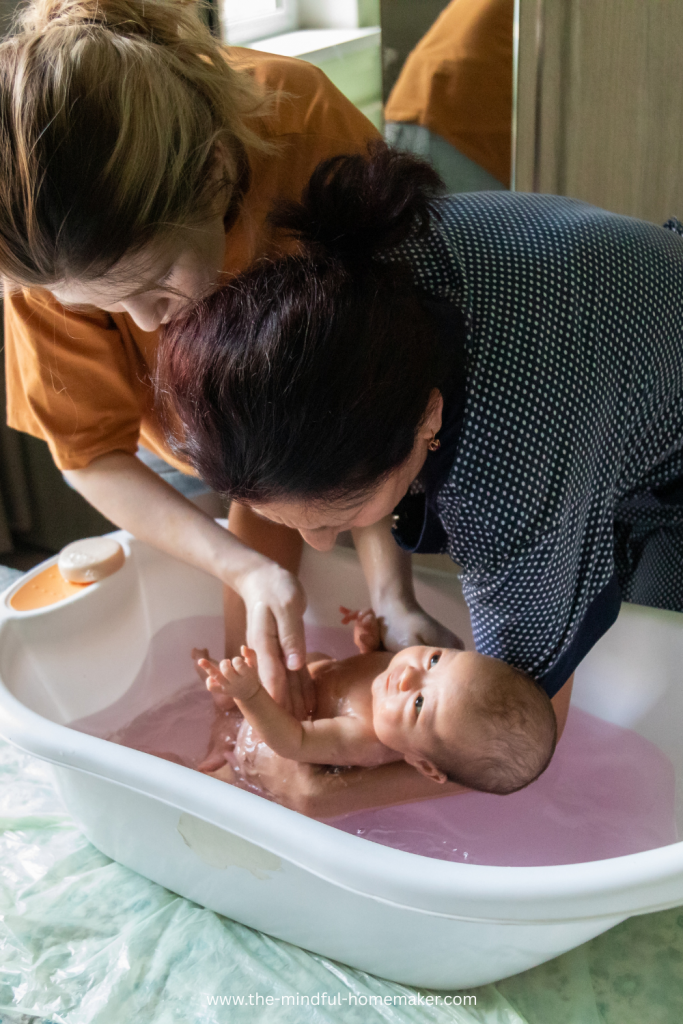
2. Learn to ask for and accept help without guilt.
a. Asking for help:
It might be more helpful to ask for help with specific things, such as a dinner or a certain errand. Keeping a list of things you can ask for as help will feel less stressful or awkward. It also allows the other person a chance to feel a part of your journey.
b. Micro-managing people:
When people choose to help you, allow them to do the task without micro-managing their output. This puts unnecessary pressure on you and your relationships. It can also sour the beautiful new days with your new born.
Love printables?
Join in to get access to all our newly released downloads and offers! Sign up to become part of a growing community of women!
3. Create Tiny actions or anchors in Your Day:
Having strict routines is often unrealistic and leads to stress. If you need a feeling of a routine then create micro actions or anchors in your day. This can look like opening the curtains in the morning, drinking water during each feed, getting dressed after breakfast etc.
These anchors become supportive actions and not another task list.
4. taking care of your needs:
Learn to incorporate small self care actions in your day to look after yourself. It could be something as simple as moisturising your hands before bed, putting on a face mask before sleep, brushing your hair in the morning etc. A simple cup of tea could make all the difference.
5. Make food and hydration easier:
Given the unpredictability of the first few months, try doing smaller tasks to make your life easier. This could look like keeping a water bottle within reach, preparing a small basket with nourishing snacks for you, accepting meal deliveries or frozen meals, choosing meals that require minimal prep work etc.


6. Rest in whatever way is realistically possible for you:
If you have the option, share the night time responsibilities. This halves the effort and the exhaustion. Rest when another trusted person is taking care of your infant. Try not to play ‘catch-up’ and prioritise your rest and well-being. Rest does not mean falling asleep. It’s about giving your body and mind a break from any sort of exertion.
Make sure you follow your unique postpartum guidance from your midwife, doctor or other qualified healthcare professional.
7. Stop Comparing Your Motherhood journey to Someone Else’s:
Social media is both, a blessing and a nuisance. It’s easy to look at polished and edited photos of other postpartum moms and compare yourself. Instead, try to distract yourself with movies you’ve been wanting to watch or books you’ve been meaning to read.
Don’t get pulled down by watching other people’s tidy homes or peaceful feeding moments. Real life is often chaotic. Every baby is different too. Some might be good sleepers and some mightn’t. Some may eat better than others. A single photograph does not show an entire day.


Bonus Tips
1. Share the mental and emotional load:
a. Communication is key:
Tell someone you trust how you’re feeling. If you don’t have family or friends living nearby then communicate with your healthcare providers.
b. Make invisible tasks visible:
This is where a small list of tasks comes in handy. This sort of task list, removes unnecessary and repetitive communication. I have created a new-mum survival checklist for this very reason. The PDF is free to download and can be printed out and placed on the fridge.
2. remind yourself that you are learning together:
A new mother has to get to know her baby and vice versa. You cannot be expected to understand every cry or grunt. Babies need time too, to adjust to life outside the womb. Confidence develops through experience. If you have difficult days, remember that they do not predict what motherhood will always feel like.


3: When exhaustion may be something more:
If you find yourself feeling persistent sadness, anxiety, unpleasant or frightening thoughts, inability to function or even disconnected to the baby… then you need to contact your healthcare provider for professional support.
4. Gentle reminder:
This beautiful and challenging phase of life is just a blip in the larger picture. It is demanding, but it passes by so soon. Enjoy the quiet snuggles with your newborn and connect with one another. Nourish your body and mind and do not forget to ask for help when you need to. Asking for help is responsible parenting.
And most importantly, give yourself grace as you adapt to one of life’s greatest changes while recovering and learning.
Download this simple New-Mum Survival Checklist!
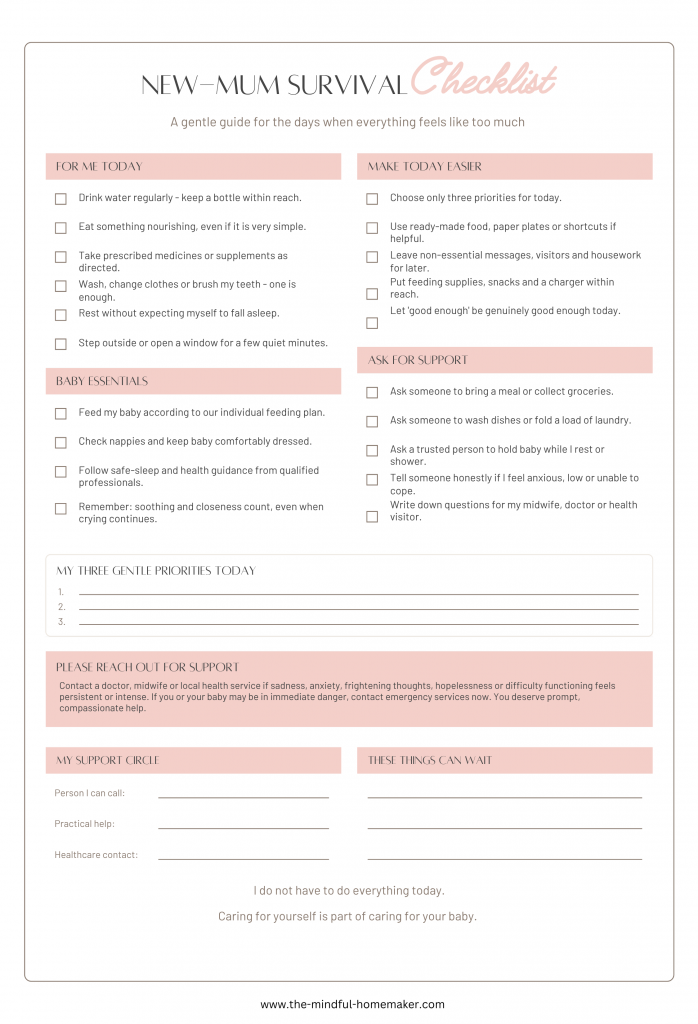
Download this FREE New-Mum Survival Checklist to make your first few months easy and stress free. You can print multiple copies and hand them out to trusted relatives and friends so everyone has a clear understanding of exactly how to help you and baby.
Join The Mindful Homemaker newsletter for gentle routines and homemaking encouragement. Share the post with a new mother who may need reassurance.
Love printables?
Join in to get access to all our newly released downloads and offers! Sign up to become part of a growing community of women!
I love hearing from my readers. If something in this post resonated with you or you’d like to add some of your own tips, then please leave a message down below!
Check out our Free Printables resource library for hundreds of Free homemaking downloads.

Planning Budgeting