
If you’re planning a move and starting to feel stressed and overwhelmed, then knowing what to pack first when moving is super important. Not only does it keep you focused and disciplined, but it also reduces your stress and anxiety.
This post is going to make moving and decluttering so much easier for you. Download your FREE moving checklist to stay up to date on all the important tasks!
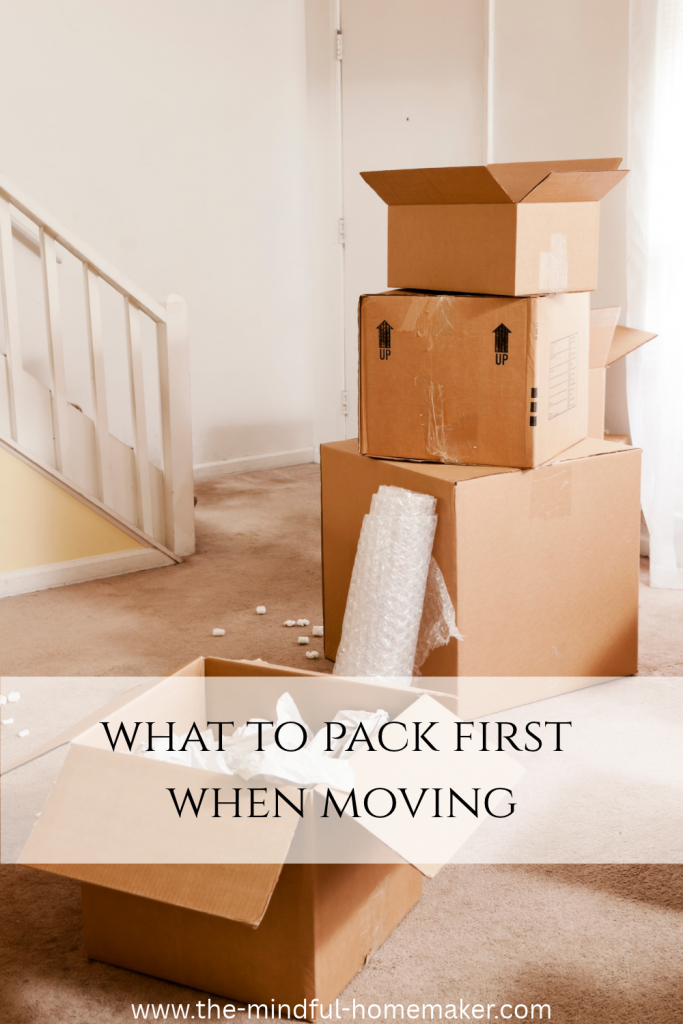
This post is all about knowing what to pack first when moving.
Not knowing where to start is usually what most people struggle with. Especially, if you have kids. Toys seem to multiply by themselves and before you know it, you’re overcome with anxiety.
A simple process I follow, is to go room by room, with a notebook in hand. Then I write down all the pieces of furniture and accessories for that specific room. You do not need to pack everything at once. Simply pack the least used items per room first!
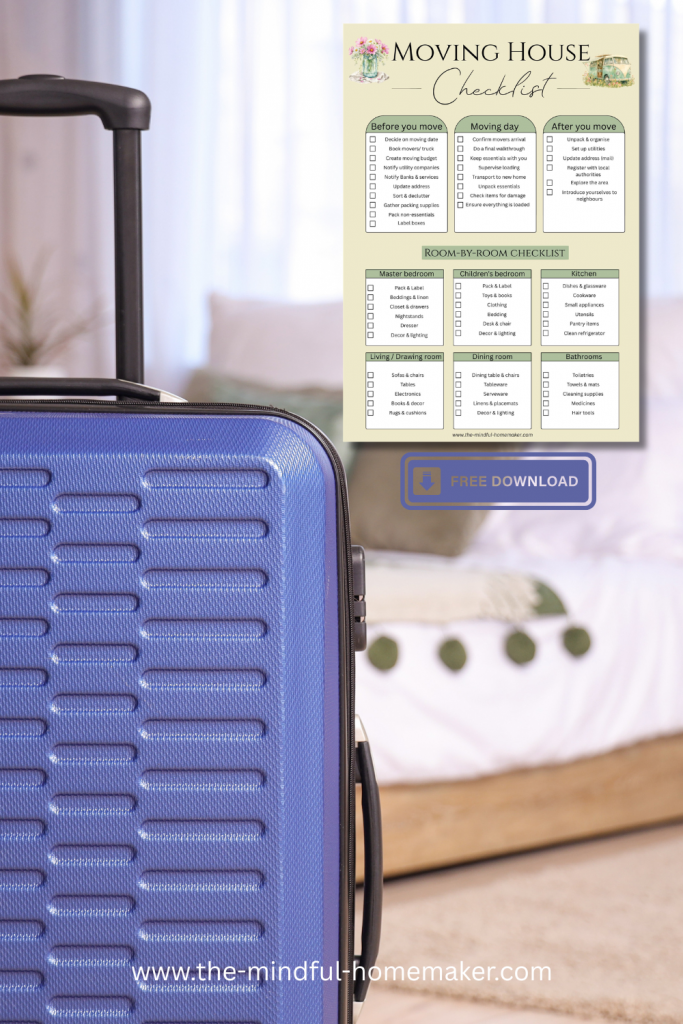
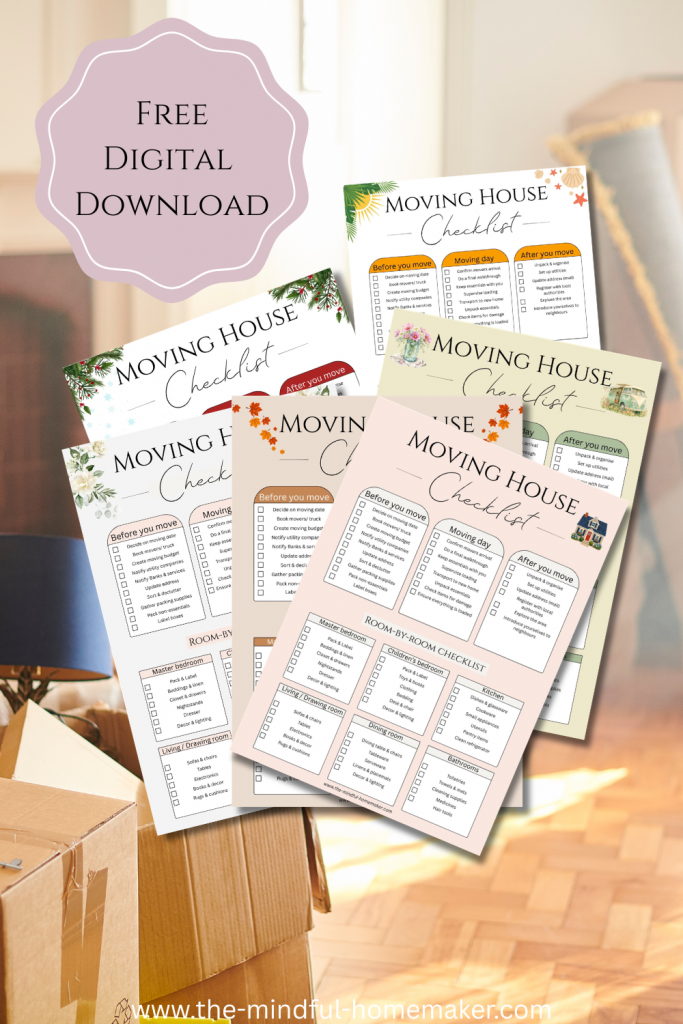
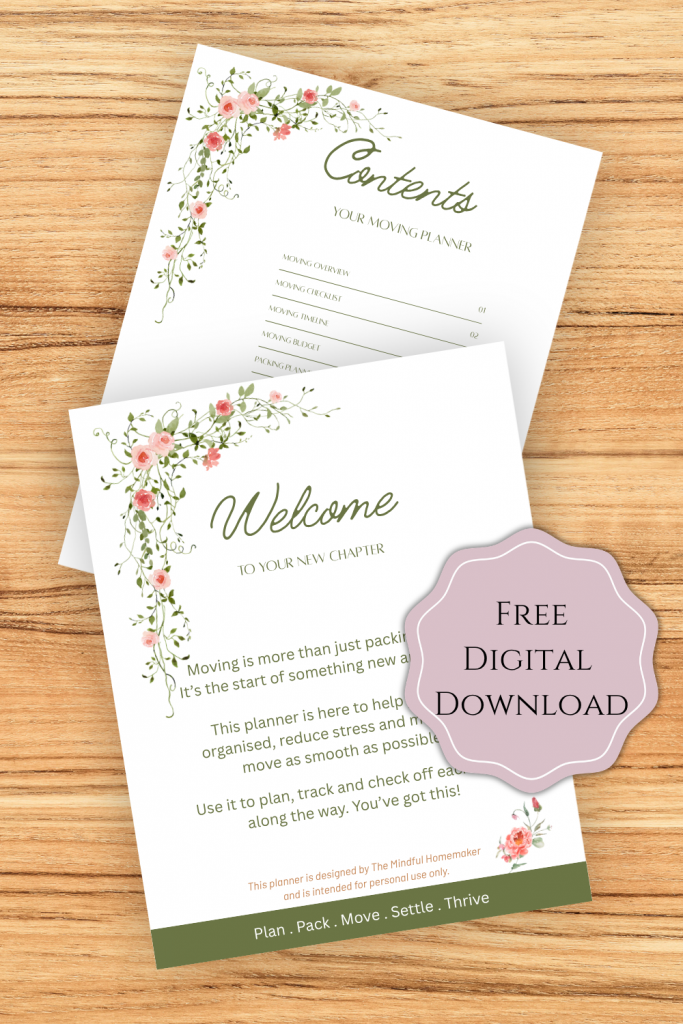
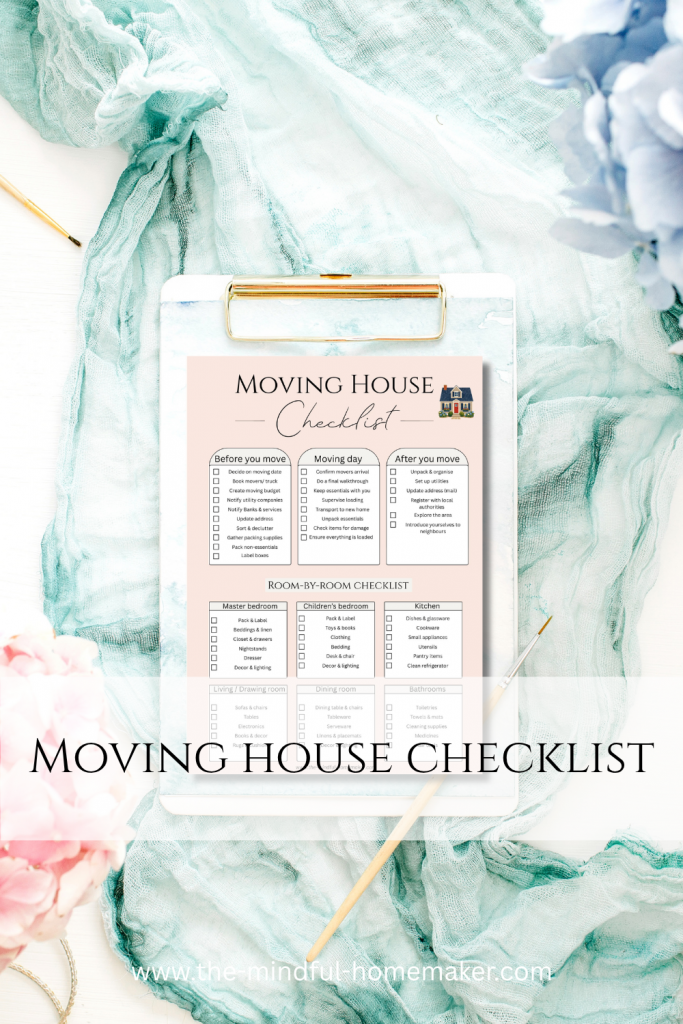
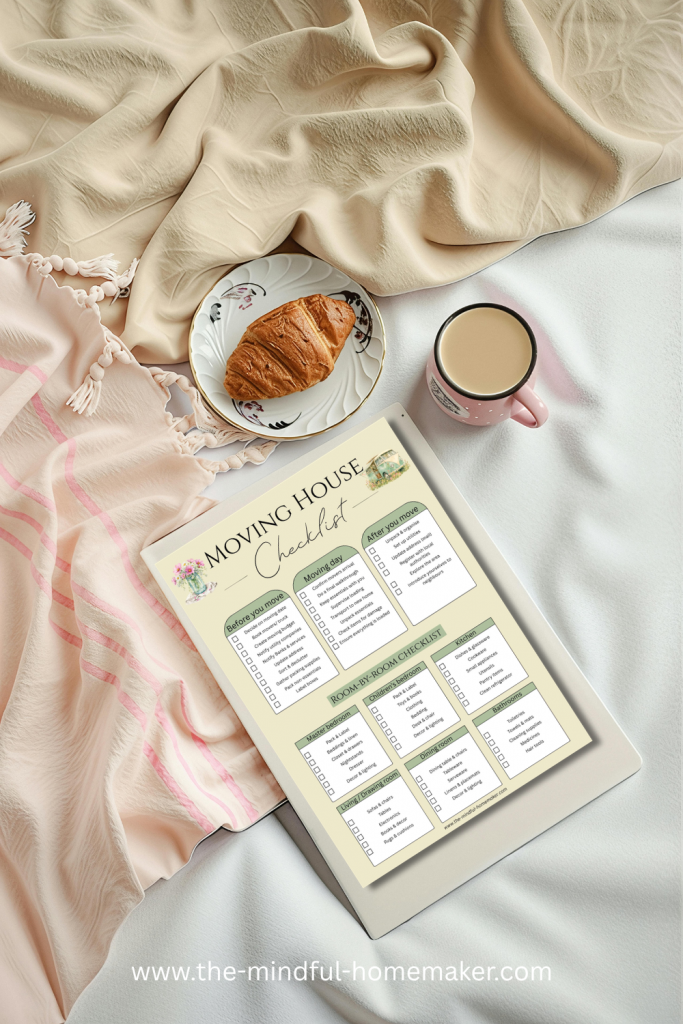
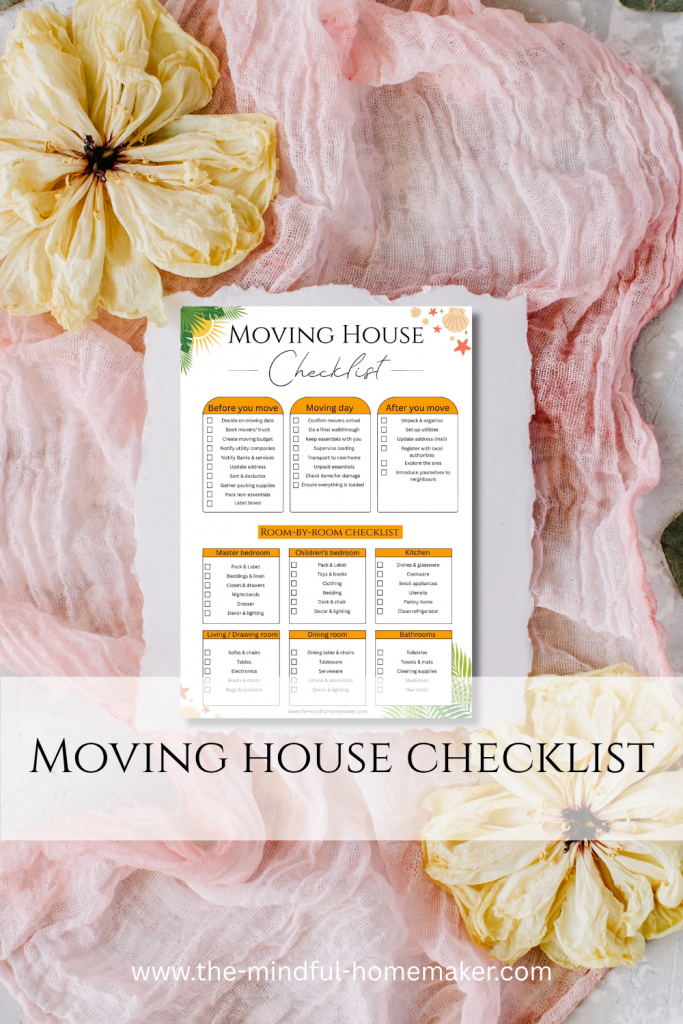
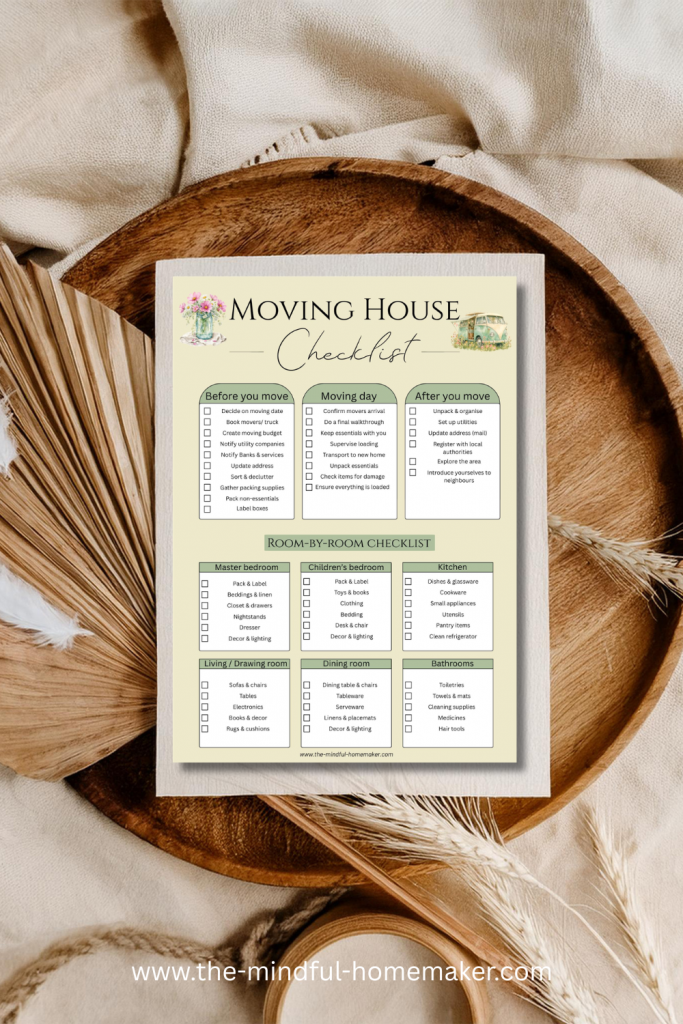
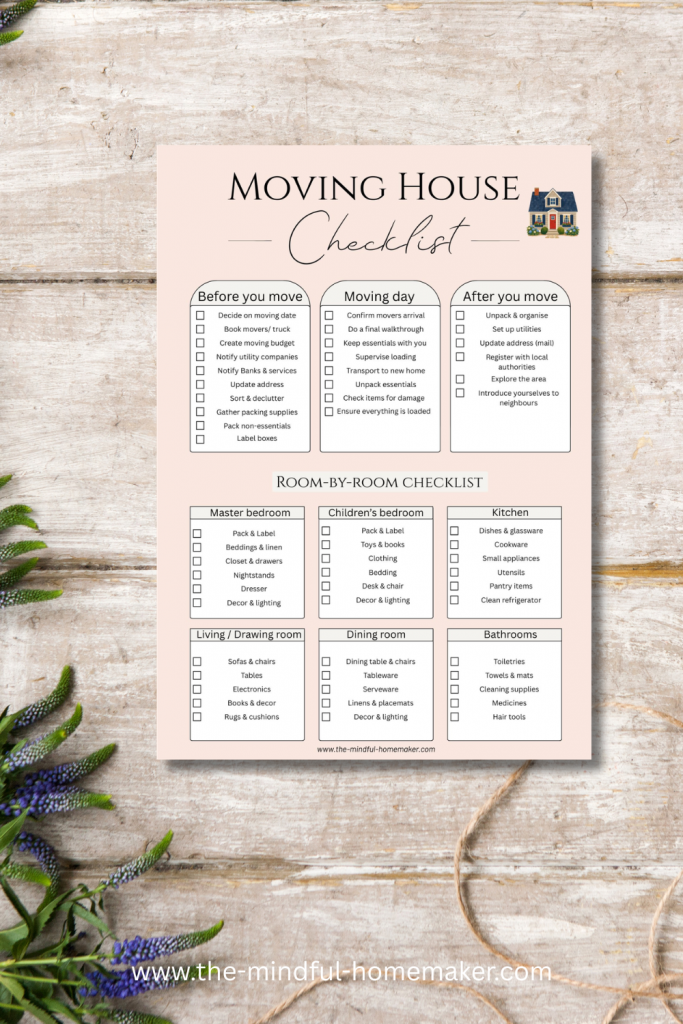
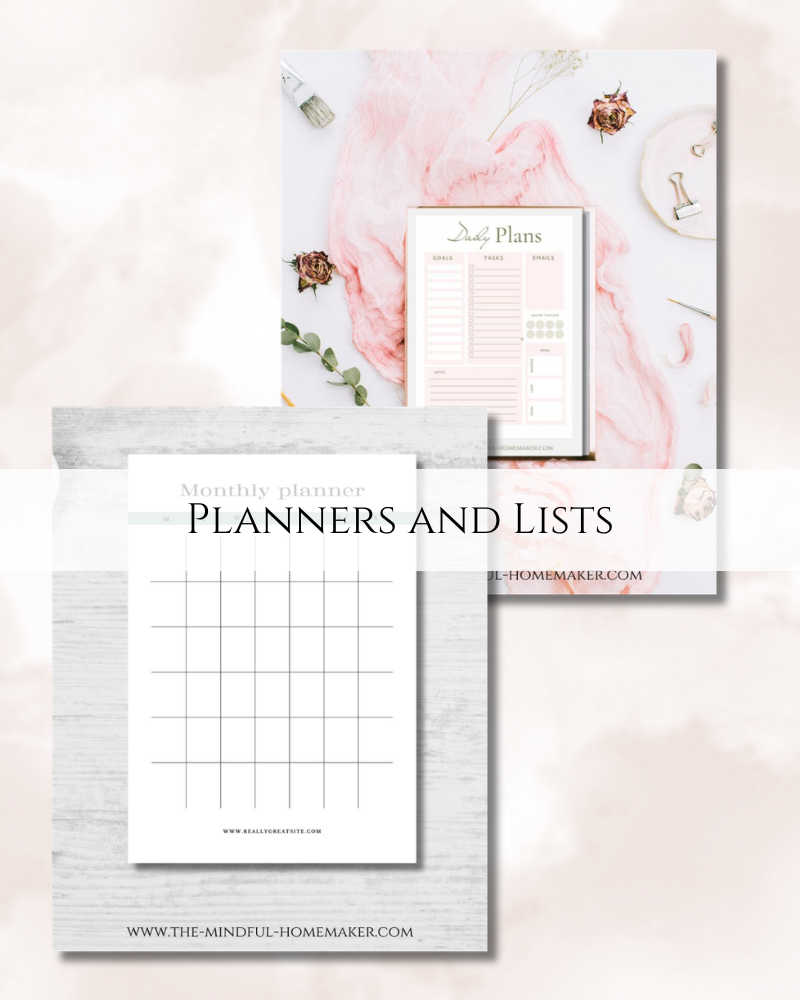
For this reason, I designed and created two tools! One is a room-by-room moving checklist, and the other is a moving planner. Used together, they are a fantastic way to make the process seamless.
Before you pack – Creating the packing kit:
Getting yourself and your home ready for moving, starts way before you actually start packing anything. It’s all in the details and the planning. Therefore, I’ve broken up this post into sections, based on the order of things.
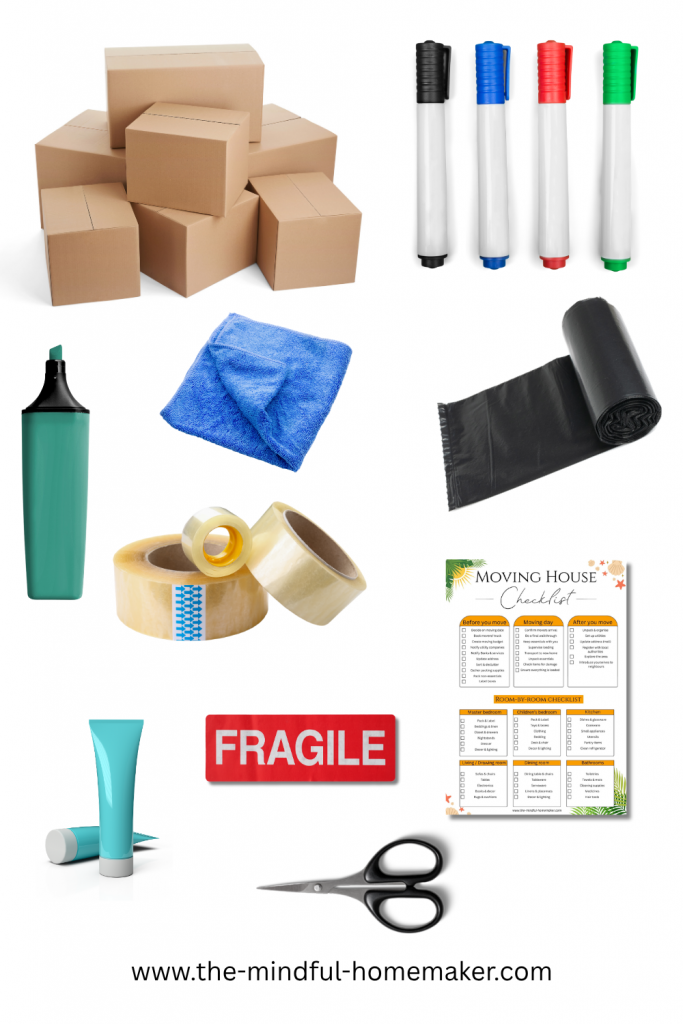
- Creating a packing kit is super easy and is just a basket of supplies you carry with you room-by-room.
- Prep boxes in several sizes and move them before hand to each room. So let’s say, you start with 3 assembled and prepped boxes PER ROOM.
- In your packing, add permanent markers and box labels.
- Add donation and rubbish bags
- Add microfibre cloths and dusting cloths
- Keep your packing checklist and moving planner in this kit.
- Some things I included in mine were: Hand lotion, Highlighters, pens, Packaging paper, wet wipes, packing tapes, scissors, and my daily planner.
Love printables?
Join in to get access to all our newly released downloads and offers! Sign up to become part of a growing community of women!
What should you pack first?
Once you have your packing kit assembled and boxes prepped, you can decide what to pack first. I’ve listed the items roughly below:
- Firstly, seasonal decorations and clothing: Since moving during the holidays isn’t very common, you can go ahead and pack those decorations up. Out-of-season clothing can be packed up too.
- Secondly, the guest room: Another unlikely situation is having guests when moving or shortly before the move. For this reason, I would start with the guest bedroom and use the freed-up space to store the finished boxes. This keeps the rest of your home clutter-free.
- Additionally, books, keepsakes and decorative objects: Keep the books you’re currently reading as a means to unwind in the evenings and pack the rest.
- Fourthly, formal dishes and occasional-use kitchenware: For the same reason as packing seasonal things and the guest bedroom.
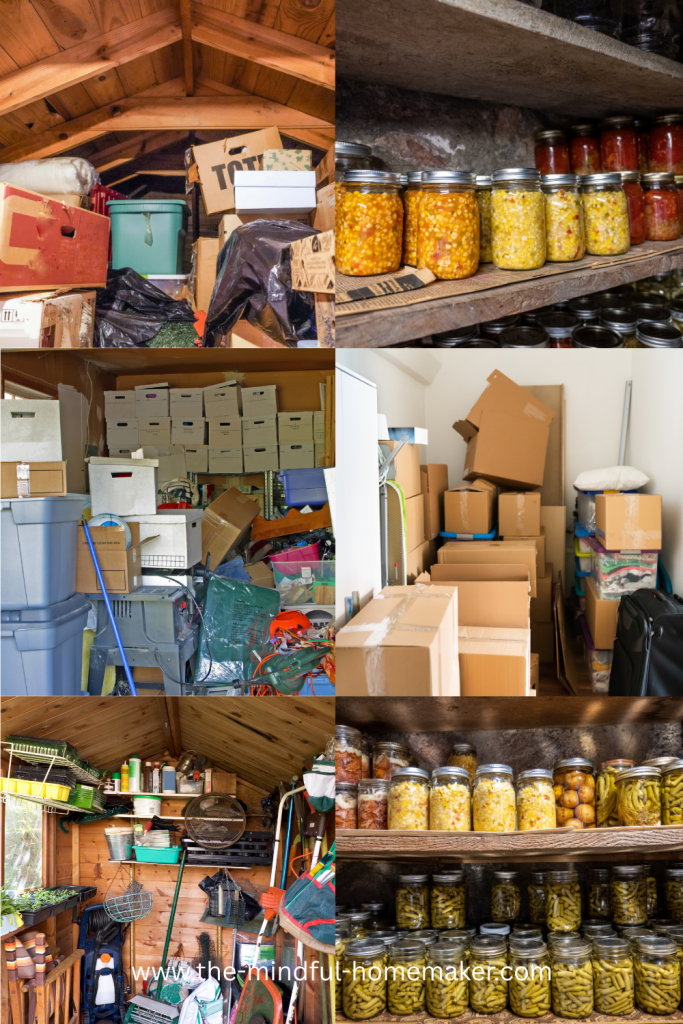
- Furthermore, stored items from the attic, basement or garage: These should probably be the very first things you pack, since most of the things are in boxes already.
- Extra linens and towels: Keep a change of linen for the beds and kitchen and pack the rest.
- And Finally, hobby and craft supplies that will not be needed before the move: You won’t have the time to indulge in your hobbies while you’re moving. It’s best to pack them away safely until you set up the new place.
TIP: In every room, leave an unmarked and open box for last minute things.
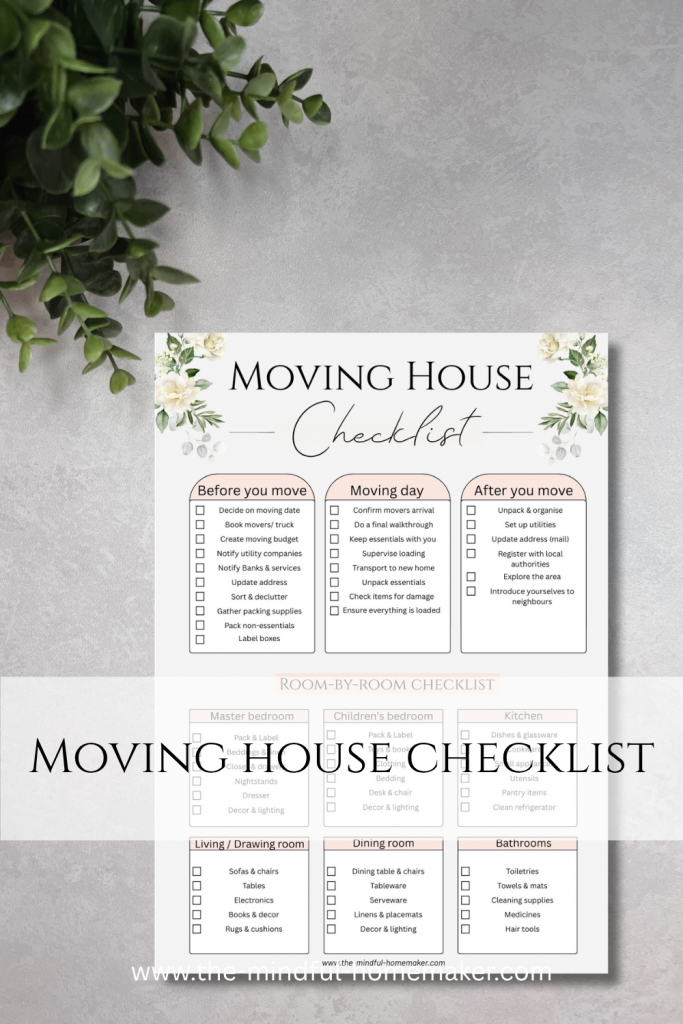
Room-by-room moving checklist
Although, I have created multiple resources for moving, such as a comprehensive moving planner, 6 basic moving checklists and one super detailed moving checklist document, I am briefly listing them down below.
1. Storage Areas, Attic, Basement and Garage:
As mentioned above, it’s often easier to pack these areas first as many things are already in boxes and not used frequently.
- Seasonal decorations
- Camping and sports equipment
- Stored clothing
- Spare furniture and household items
- Tools that will not be needed
- Archived paperwork: Most importantly, keep what you need for the house you’re currently in, such as the sale deed, any financials etc.
- Items already stored in boxes
- Chemicals and cleaning agents – Keep what you need and dispose of the rest responsibly.
2. Guest Room:
For example, keep one set of bedding or linen available just in case and pack up the rest.
- Decorative accessories
- Spare bedding
- Extra pillows and blankets
- Guest towels
- Books
- Out-of-season clothing
- Furniture that can be dismantled early

3. Living Room:
Firstly, start with decorative pieces and items that are used occasionally. Leave basic lighting, chargers, the television and a few comfortable items until later.
- Framed photographs and artwork
- Vases and ornaments
- Books
- Candles
- Board games
- Extra cushions and throws
- Media collections
- Items inside display cabinets
4. Dining Room:
Remember to keep enough plates, glasses and cutlery for the final days.
- Formal dinnerware
- Serving dishes
- Table linens
- Seasonal table decorations
- Glassware
- Bar accessories
- Rarely used appliances
5. Home Office:
Remember to keep vital documents such as passports, contracts, financial records and moving documents in a separate folder that travels with you.
- Old files and reference materials
- Extra stationery
- Books
- Spare cables and equipment
- Decorative objects
- Archived business records
Love printables?
Join in to get access to all our newly released downloads and offers! Sign up to become part of a growing community of women!
6. Bedrooms:
Packing in this order will help keep things efficient and functional, thus reduced stress. Create a small capsule wardrobe for each family member to use during the final week.
- Out-of-season clothes
- Special-occasion clothing
- Extra shoes and bags
- Jewellery and accessories
- Books and decorations
- Spare bedding
- Most children’s toys

7. Children’s Rooms:
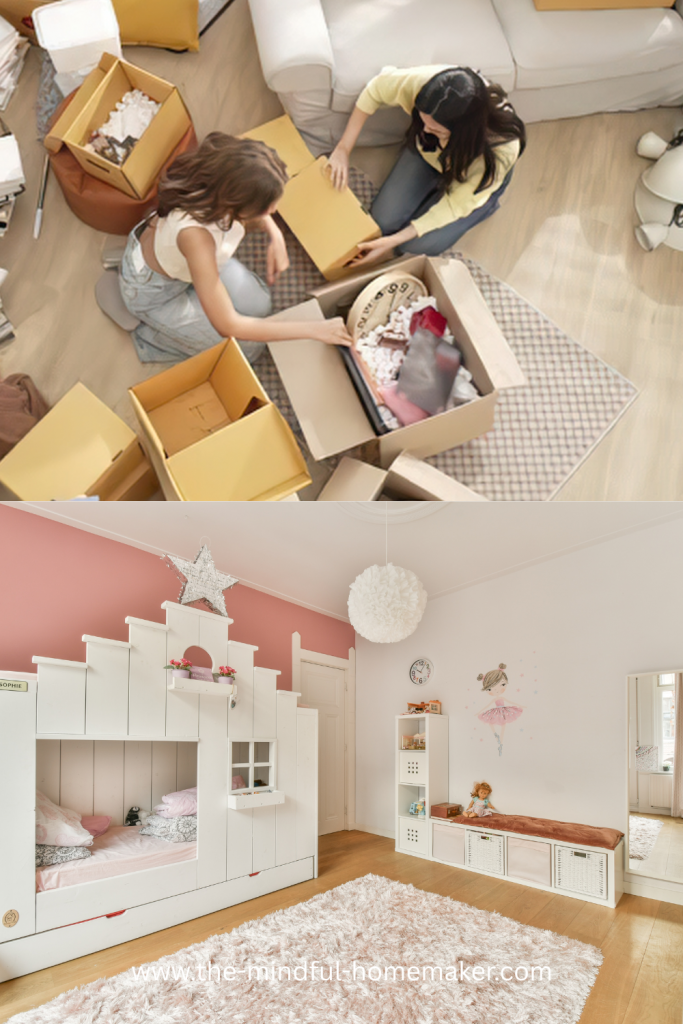
Let each child choose a small comfort bag containing favourite toys, pyjamas, snacks and an activity for moving day. This helps keep them calm and relaxed during the move. It also gives them a feeling of control and autonomy, which will make the move easier for you.
- Outgrown clothing
- Toys that are rarely used
- Books that are not current favorites
- Artwork and keepsakes
- Seasonal belongings
- Extra bedding
8. Bathroom and Linen Closet:
Keep current medications, first aid kits and everyday toiletries until the final few days.
- Extra towels
- Backup toiletries
- Beauty tools used occasionally
- Decorative items
- Spare linens
- Unopened products
9. Kitchen:
Remember that you will still need to cook and serve until the final day. Keep a couple of pots and a frying pan along with a plate, cutlery, utensils per family member.
- Special-occasion dishes
- Baking equipment
- Duplicate utensils
- Cookbooks
- Serving platters
- Small appliances used infrequently
- Pantry overflow
- Decorative items
10. Entryway, mudroom, Laundry Room and Utility Areas:
Make sure to keep a small cleaning kit available and on hand for the final days.
- Out-of-season coats and shoes
- Extra bags
- Spare cleaning products
- Ironing equipment
- Decorative items
- Extra laundry supplies
11. What Should Be Packed Last:
Create a practical list of things that you will need with you. This would basically be a collection of things you left for the final days from each room you packed.Prepare a First-Night Box
- Daily medications
- Important documents
- Phone and laptop chargers
- Toiletries
- Cleaning supplies
- Basic cookware and dishes
- A few changes of clothing
- Children’s comfort items
- Pet supplies
- Valuable or sentimental belongings
- Keys and moving paperwork
Preparing a first-night box
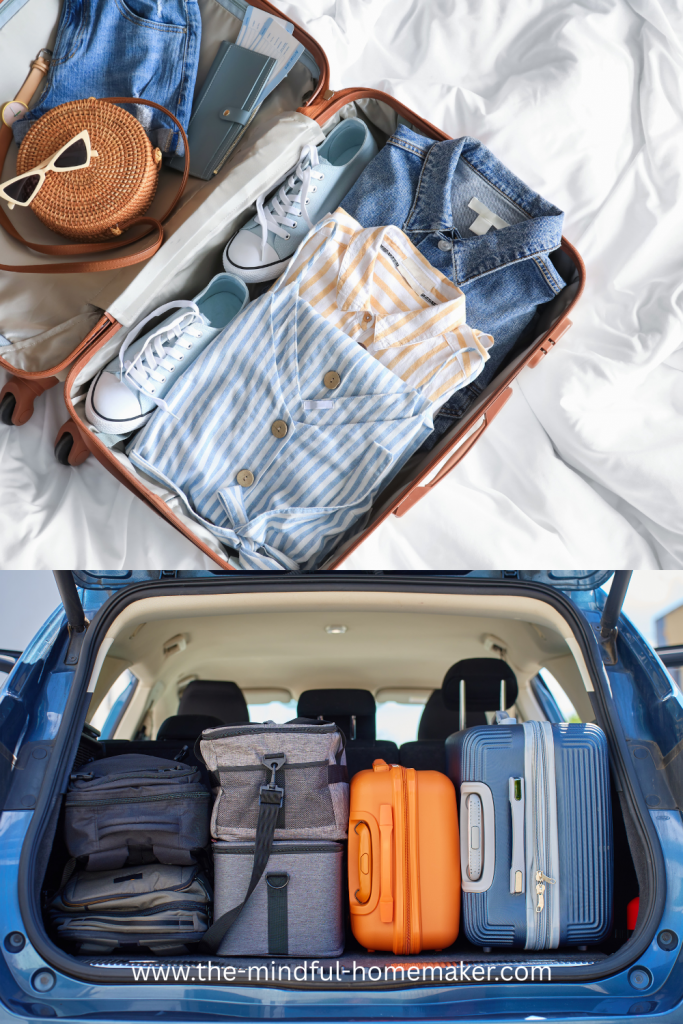
What exactly is a first-night box? This a basket or a box, that essentially travels with you and your family and not in the moving van or truck. This could include: Toilet paper and hand soap, Towels, Pyjamas and clean clothes, Bed linens, Chargers, Basic toiletries , Medications, Snacks and drinks, Coffee or tea supplies, Children’s essentials, Pet food, Basic tools, Paper towels and rubbish bags.
This list could look different for you and me, so make sure you have what your family needs in this kit.
The timeline for packing also varies on the situation, country, distance etc. I’ve broken down a basic timeline example below.
1. Four to Six Weeks Before Moving:
Pack storage areas, seasonal items, decorations, books and guest-room belongings.
2. Two to Three Weeks Before Moving:
Pack most clothing, living-room items, hobby supplies and occasional-use kitchenware.
3. One Week Before Moving:
Pack most bedrooms, bathrooms and kitchen items. Prepare suitcases and the first-night box.
The Final 24 to 48 Hours:
Pack everyday belongings, dismantle remaining furniture and keep essential documents and valuables with you.
While it’s great to have a packing checklist and a planner to help you, there are some things we need to be careful about. It’s easy to become distracted by the million things you need to do. But here are a few things you need to keep in mind as you go room-by-room.
1. Packing without decluttering first:
If you don’t declutter as you go, you’re going to end up with more stuff and the same messy situation in the new place. Decluttering also makes sure, that you’re not taking up more room in the moving van. This could seriously save you multiple trips or paying for a larger transport and more labour.
2. Making boxes too heavy:
Even if you decide to go with a moving company, don’t make the boxes heavier than the recommended weight listed on the cartons. Pay special attention to the boxes with books. You could also be charged more for heavier boxes.
3. Mixing items from several rooms:
This will end up as a logistical mess in the new house. You will end up wasting time and energy, dragging things from one end of the home to another.
4. Forgetting to label the sides of boxes:
Every box needs to be labelled on 3 sides. The top, a length side and either one of the widths. This makes sure, that even with the boxes stacked behind each other, you or the moving men will know exactly where to put them.
5. Packing important documents in the moving truck:
This is not only inconvenient but a disaster waiting to happen. Documents such as a misplaced passport or national ID are a huge security risk for you.
6. Leaving the kitchen until the final evening:
I have actually made this mistake myself. Leave out only the things that you need in the final week. Scale down on cooking if you have to and finish the frozen leftover.This is not only inconvenient but a disaster waiting to happen. Documents such as a misplaced passport or national ID are a huge security risk for you.
7. Failing to prepare a first-night box:
Moving into a new home is exhausting. Not just from the actual move itself, but due to the previous couple of months spent packing, decluttering etc. The last thing you need is to be completely done for the day and not being able to find what you need. It’s so much easier keeping a first-night box, than to try unpacking random cartons in the hopes of finding what you need.

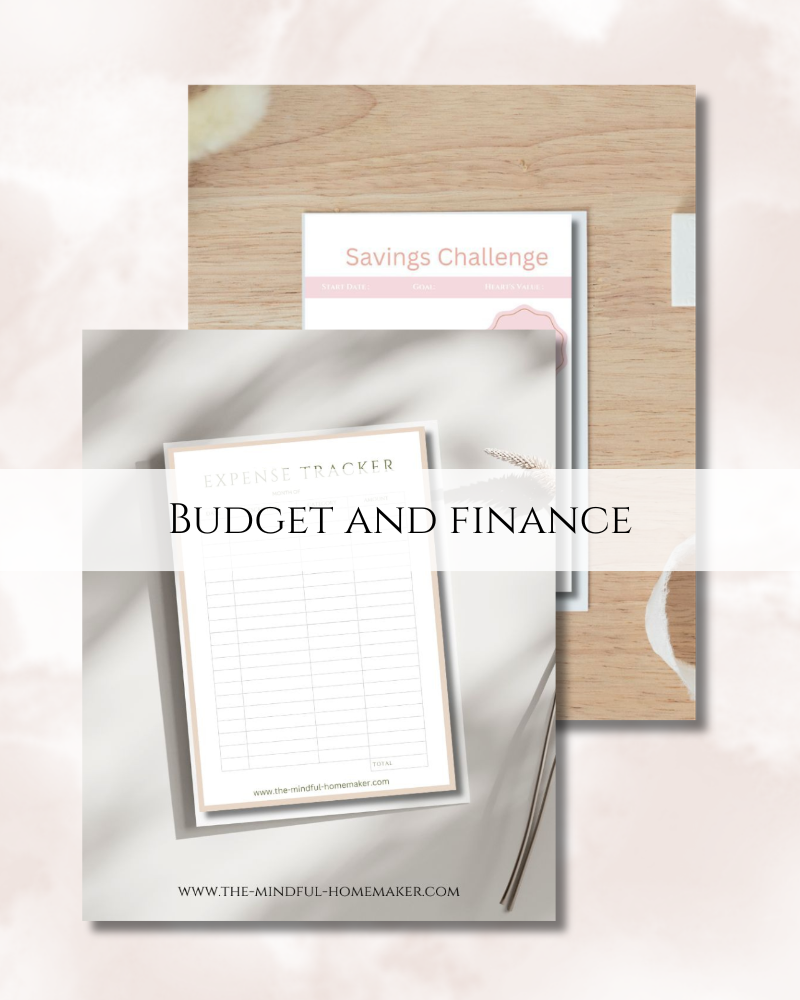
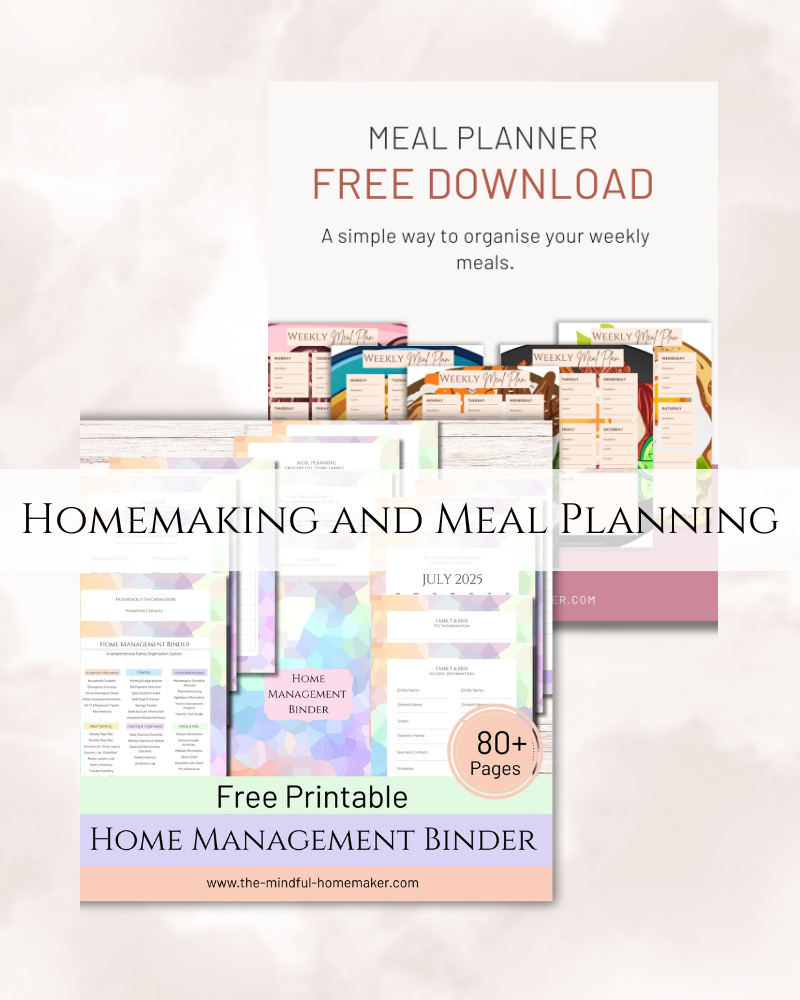
Planning Budgeting
It’s important to remember, that calm and organised packing should start with the least used areas and things. By sorting out one room at a time, you will experience less stress and anxiety. Small and consistent steps towards progress are often more successful than rushed and hurried ones.
If you like this post, then you’ll love the FREE printable moving planner and the room-by-room checklist.
You can download them, by clicking the button below.
Watch the Video!